Does WILDE Actually Work? The Data Says Yes.

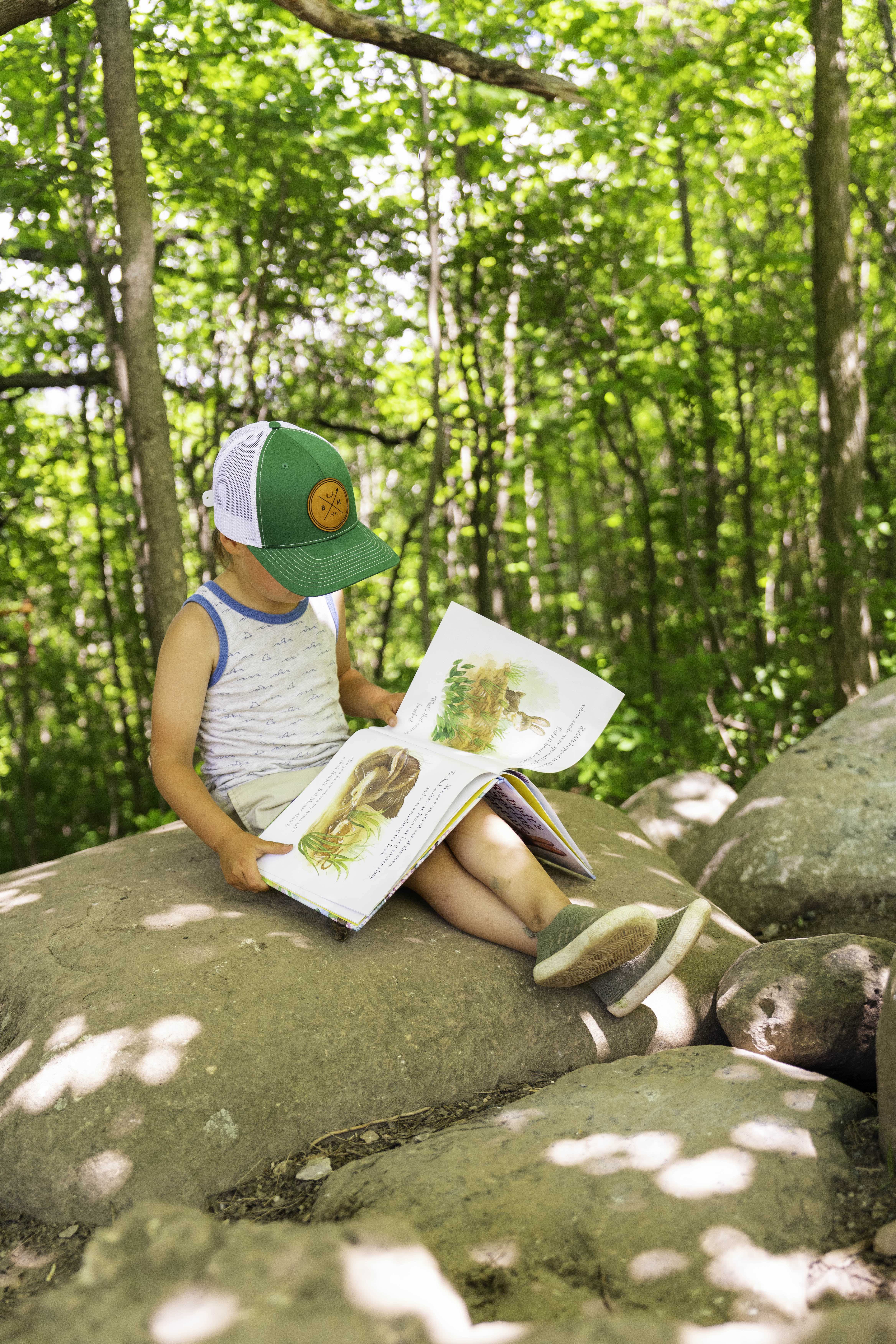

The question has followed WILDE from the beginning, sometimes politely and sometimes with that slightly raised-eyebrow tone that says the person already thinks they know the answer: this all sounds lovely, but are the academics actually strong?
It is a fair question. In fact, it is probably the question. Parents can see the obvious things. They can see the small classes. They can see the teachers who actually know the and care for their kids. They can see the projects, the outdoor time, the ski days, the canoe trips, the muddy boots, the kids coming home tired in that good way. They can feel that something healthier is happening here. But still, somewhere in the back of the mind, especially for parents who were raised inside a more traditional model of school, the old fear creeps in.
For many people close to WILDE, the answer has always been obvious. Of course they are. Small classes change the work. Great teachers change the work. An engaged child learns better than a bored one. A child who feels known, safe, challenged, and connected is going to take more risks in their learning. A curriculum that actually means something to a child is going to land more deeply than another worksheet handed out because it is 10:40 and the schedule says math.
This was never particularly mysterious.
But if we are being truly honest, there was a deeper question sitting underneath it, and it was the question that really tested the model. Could WILDE be better for kids in the obvious human sense and still hold up academically? Could students do less traditional school, minute by minute, and still be ahead?
Could they spend less time sitting in desks, less time being talked at, less time moving from one subject block to the next, less time filling out the kinds of sheets that look like school but often have every little to do with actual learning, and still come out strong in the same academic content as their peers?
That is the interesting part. Because if the answer is yes, then we are not just talking about a nice alternative for outdoorsy families. We are talking about a pretty serious challenge to the entire structure of modern education.
Six years into WILDE School, we have a much clearer academic picture. We use CAT4-informed benchmark work as one outside reference point. It is not the whole story of a child, and it is not the only way we assess learning, but it gives us a useful check against grade-level expectations in core academic areas.
Here is the plain English version: in the 2025/26 benchmark set, about 8 out of every 10 results were above the student’s enrolled grade level. Almost 85% were at or above grade level. The average student was working about 1.8 grade-equivalent years ahead of their enrolled grade. Returning students also showed strong growth from one year to the next: on average, they gained 1.78 grade-equivalent years in a single year, which means they did more than a year’s worth of academic growth in a year. Their lead above grade level also widened by 0.78 years, meaning they were not just holding their place. They were pulling further ahead year over year.
Now, numbers are not the whole child. They never have been and they never will be at WILDE. A child is not a data point any more than a forest is a timber yield. We read these results alongside teacher assessment, daily observation, student work, formal feedback, and the lived reality of who these kids are becoming. But numbers can still tell us something, and these numbers tell us that WILDE students are not falling behind because they spend more time outside, move more, build more, work through real projects, take on responsibility, and engage in a school day that looks very different from the one most of us grew up inside.
The signal points the other way.
This is where things get interesting. The old assumption is that academic strength requires more traditional academic time.More sitting. More quiet. More compliance. More worksheets. More homework. More controlled blocks of instruction. More of the child’s body suppressed so the mind can supposedly get on with the “important work”.
But from a Human Ecology perspective, this never made much sense. Human beings are living systems. Children are not machines that improve simply because we increase inputs. More minutes does not automatically mean more learning. More sitting does not mean more attention.More control does not mean more growth. Put a child in the wrong conditions and you spend half the day fighting the child’s biology, then congratulating yourself when they finally submit to the system. Put a child in the right conditions and the work changes.
A regulated child learns better. A child who has moved can think more clearly. A child who is known by their teacher is more willing to struggle. A child who sees meaning in the work remembers more because the work attaches to something tangible. A child who has been trusted with actual responsibility begins to carry themselves differently. This should not be radical, but somehow it is.
What WILDE is showing is that the supposed trade-off was false. We do not have to choose between strong academics and a full childhood. We do not have to choose between rigour and joy, between curriculum and nature, between intellectual seriousness and muddy boots. The whole premise was wrong.
You can actually have your cake and eat it too!
That is the revolutionary part. Notrevolutionary in the dramatic, slogan-on-a-poster kind of way. Revolutionary because it quietly undermines the basic logic of the entire system. If children can spend more time outside, move more, feel better, build stronger relationships, take on more meaningful work, and still meet or exceed conventional academic expectations, then the old model has some explaining todo.
Why did we ever assume that seriousness looks like stillness? Why did we accept the idea that a child has to give up their body, their energy, their curiosity, their need for relationship, and their connection to the natural world in order to become ‘educated’!? Why did we build schools that so often work against the very beings they are meant to help grow?
I think the answer is fairly simple. The system was never really designed around the biology or development of children. It was designed around efficiency, control, scale and measurement; a structure that allowed adults to move large numbers of students through school in an orderly, manageable way. And over time, I think we began to confuse the structure with the learning itself. Even many high-end private schools still follow essentially the same antiquated model. The buildings are nicer, the class sizes may be smaller and the facilities more impressive, but underneath it is often just a dressed-up version of the same mismatched paradigm.
WILDE began with a different assumption: What if we stopped fighting childhood and started designing for it? What if nature was not a break from learning, but part of the learning system itself? What if movement was not something to manage out of children, but one of the ways they regulate and make sense of the world? What if relationships were not a nice bonus, but the actual delivery mechanism for deep learning? What if challenge, discomfort, responsibility, and adventure were not distractions from academics, but some of the very conditions that make academic growth possible?
This is not loose. It is not soft. It is not a rejection of curriculum or high expectations. Quite the opposite. It is a more demanding model in many ways, because it asks more of the child and more of the teacher. It asks the teacher to know the student, not just deliver the lesson. It asks the child to engage, not just comply. It asks the school to create the conditions where growth is more likely to happen, rather than simply blaming the child when it doesn’t.
There will always be caveats, because there should be. Children do not develop in straight lines. Some years are leaps and some years are consolidation. Some students need more support in specific areas. Some data needs to be read carefully and not overstated. That is true in every honest school.
But the broader pattern is getting very hard to ignore…..
WILDE works.
It works because small classes let teachers actually know the child. It works because great teachers can shift the day based on what is in front of them. It works because meaningful curriculum gives students something worth thinking about. But more importantly, it works because the model is aligned with how children actually grow. Their bodies are not in the way of learning. Their need for movement is not an inconvenience.Their desire for purpose is not a distraction. Their relationships, emotions, nervous systems, and physical environments are not separate from academics.
They are the soil academics grow in.
That may sound obvious once you say it outloud. But most of modern education is still built as if it were not true.
So yes, WILDE works. The data says so. The kids have been telling us for years. The teachers have seen it every day. And now the numbers are catching up to what, deep down, many of us already knew.
Children are not meant to be educated against their nature.
They are meant to be educated through it.
Onwards!
Jeff
Published:
June 11, 2026
How WILDE School Blue Mountains is rewilding education through outdoor, nature-based learning — and the remarkable results it is producing.
Published:
October 14, 2026

Why do so many young Canadians feel hopeless? Explore the purpose gap in education and how nature-based learning can rebuild direction and meaning.
Published:
October 14, 2026