2026: Will This Be the Year We Stop Pretending?
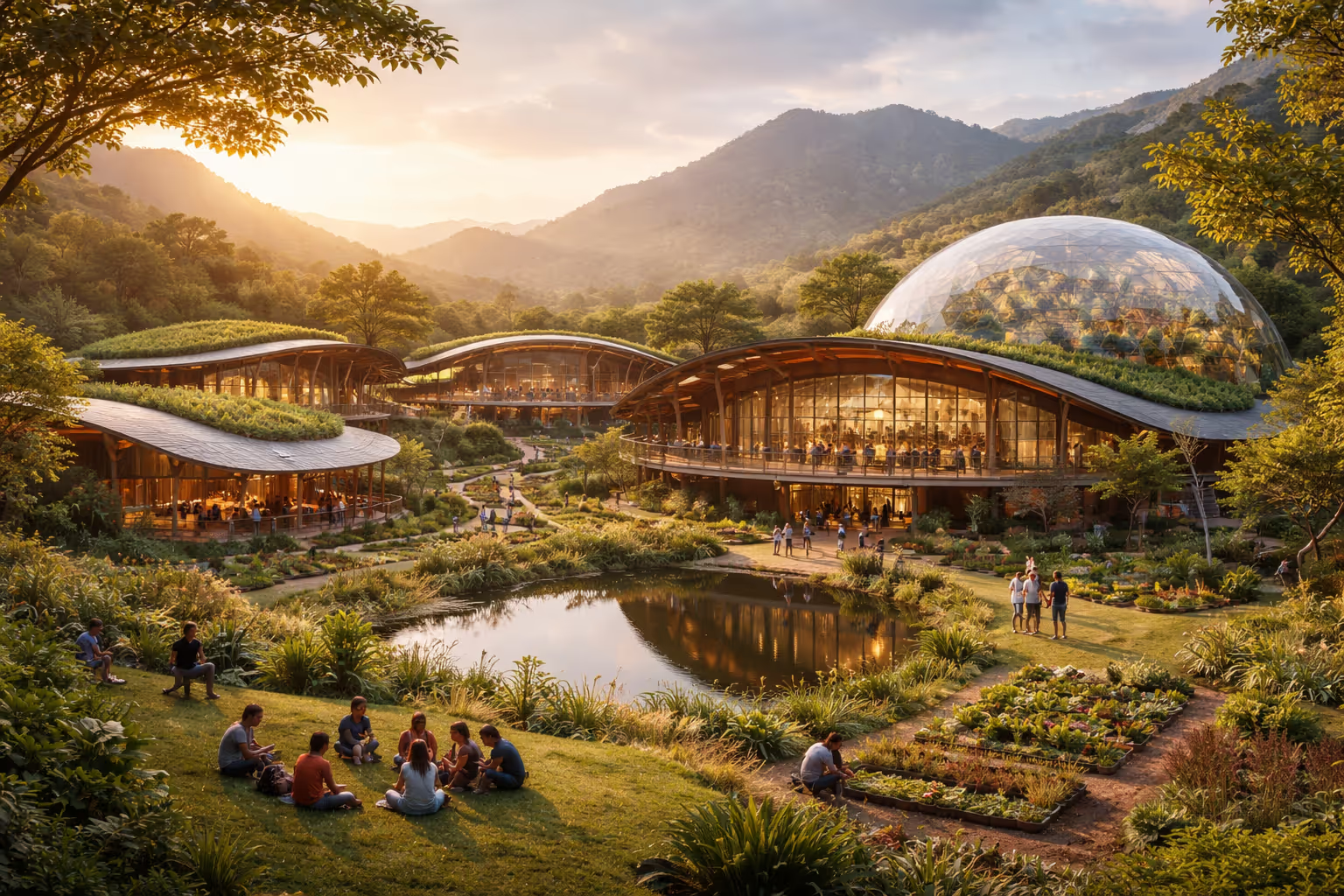

The new year arrives with the familiar language of renewal. Fresh starts. Better habits. Another chance to get it right. But beneath the ritual optimism sits a quieter truth we rarely name: much of what is failing around us is not failing because we lack information, resources, or good intentions. It is failing because we are choosing not to confront what we already know.
What we are living through is not a sudden crisis, and it is not a mystery. We are pretending it is. We describe rising anxiety, burnout, and disengagement as individual problems rather than the predictable outcome of environments that no longer fit human development. We talk about resilience while preserving systems built on compliance, efficiency, and control. We signal concern while protecting the structures that produce the harm.
This pattern has a name. It is institutional avoidance.
We are asking humans with nervous systems shaped over tens of thousands of years by movement, relationship, risk, and contact with the natural world to function inside industrial social systems optimized for standardization and output. At the same time, we immerse them in digital environments that fracture attention, compress time, and reward constant performance. Then we label the fallout a mental health emergency and treat the individuals rather than the design.
This is not care. It is management.
The effects are already visible. Attention is thinning. Anxiety is appearing earlier. Disengagement is becoming the default posture of adolescence. Burnout is arriving before adulthood. Schools respond by adding layers of programming, platforms, metrics, and interventions, while leaving the underlying architecture intact.
That architecture is not just outdated. It is negligent.
By framing this as a mental health crisis, institutions are able to express concern without accepting responsibility. Anxiety becomes pathology rather than pressure. Burnout is framed as a personal limit rather than a design flaw. Disengagement is labeled apathy instead of recognized as self-protection. Children are medicated, accommodated, or managed so they can continue functioning inside systems that remain fundamentally misaligned with their biology and development.
This is compliance dressed up as care.
True care requires redesign. Compliance requires only monitoring and management. Most institutions have chosen the latter.
Education, in particular, has been organized around efficiency, standardization, and throughput. Children move in age-based batches. Learning is broken into outcomes that are easy to measure and harder to live with. Attention is treated as unlimited. Time is compressed. Movement is marginal. Responsibility is deferred. Meaning is assumed to emerge on its own.
It doesn’t.
Humans are not abstract processors of information. We are embodied, social, place-bound beings. We learn through friction, responsibility, repetition, and consequence. We need space to fail without collapsing and challenges that feel real enough to matter.
Most schools no longer provide this. They offer safety without agency, stimulation without depth, and achievement without direction. Risk is eliminated, experience is sanitized, and control is mistaken for care. When students feel unsteady, bored, or lost, the system blames the individual rather than the conditions it has created.
At the same time, young people are being handed tools of unprecedented cognitive power. Algorithmic systems generate answers instantly, shape narratives invisibly, and reward certainty over reflection. Adults argue about policy and guardrails. Children adapt first and pay the price.
This is not a neutral moment.
The question is no longer whether technology will change education. It already has. The question is whether we are willing to redesign the human conditions of learning with the same seriousness we apply to systems, platforms, and data.
At Wilde, we chose not to wait.
We are not preparing students to comply with the future. We are preparing them to meet it.
That means rebuilding learning around the body, not just the intellect.
It means restoring time for attention, judgment, and recovery.
It means grounding thinking in real places, real work, and real consequence.
It means treating character, agency, and direction as essential outcomes, not optional enhancements.
These choices do not align neatly with dominant models of schooling. They do not scale easily. They challenge cultures built on control, predictability, and risk avoidance. They require adults willing to tolerate uncertainty and give up some authority.
But they produce something increasingly rare: young people who are steady. Young people who can orient themselves without constant instruction. Young people who can think without outsourcing their judgment. Young people who can meet uncertainty without collapsing under it.
In a world flooded with information, this is not enrichment. It is survival.
Education is not neutral infrastructure. It is a long-term bet on the kind of society we are willing to live with.
History names moments in hindsight. Responsibility belongs to the present.
Onwards!

In a world being rapidly reshaped by artificial intelligence, climate change, and cultural disruption, it’s becoming harder to ignore a simple truth.
Published:
September 10, 2026

Why do so many young Canadians feel hopeless? Explore the purpose gap in education and how nature-based learning can rebuild direction and meaning.
Published:
September 10, 2026
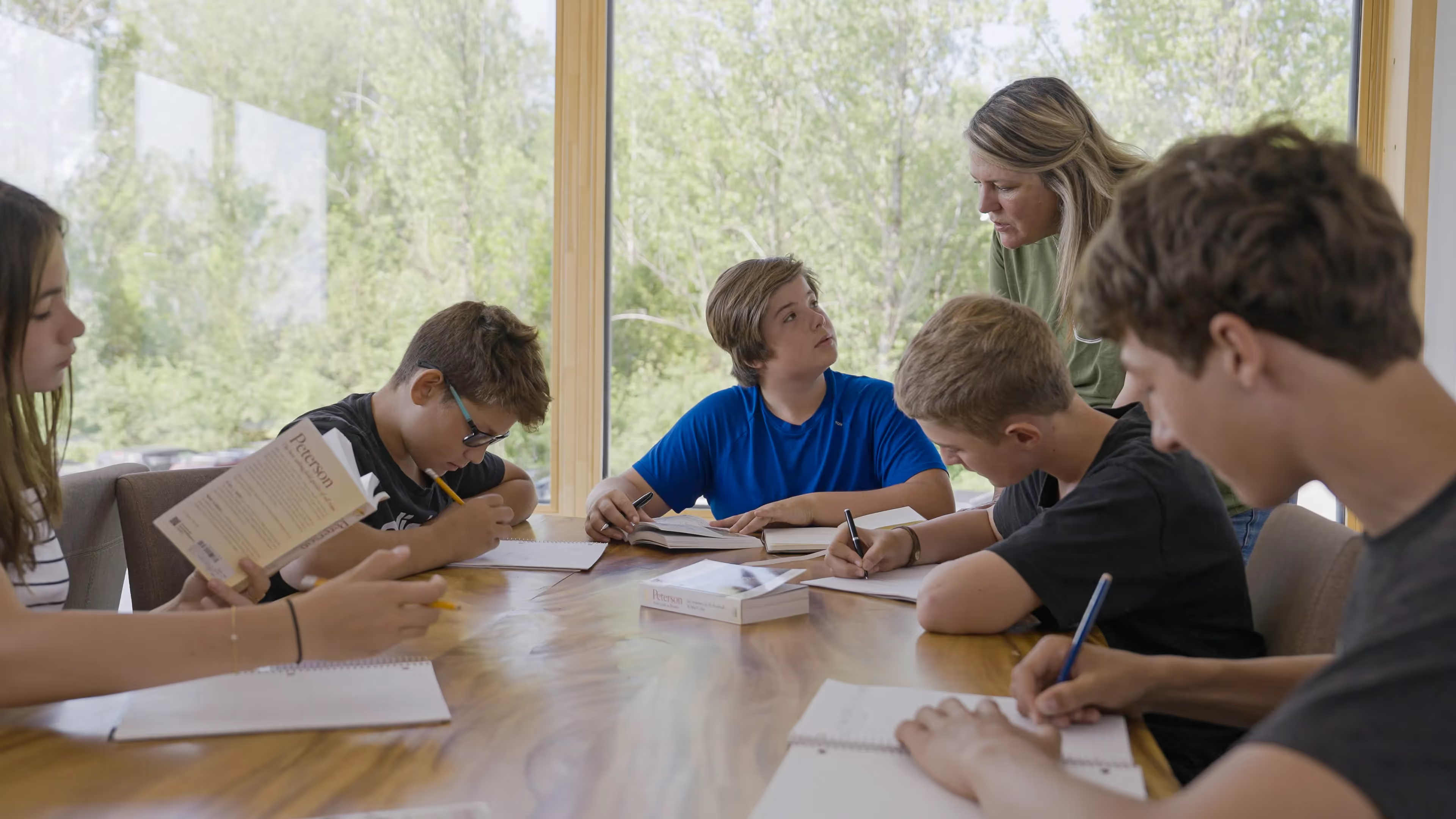
What if school focused on who children become, not what they achieve? Discover WILDE School's transformative approach to outdoor education.
Published:
March 18, 2026